


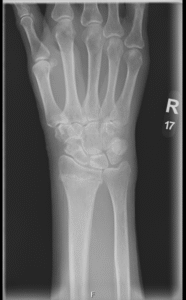
Wrist fractures
Do All Wrist Fractures Need Surgery?
Understanding Distal Radius Fractures
By David Bodansky, Consultant Hand & Wrist Surgeon
A broken wrist—often the result of a fall onto an outstretched hand—is one of the most common injuries I treat. The most frequently fractured bone in the wrist is the distal radius, which is the end of the forearm bone closer to the hand. You have two forearm bones and the radius is the bone on the thumb side of the wrist.
Whether you’re an athlete, a grandparent who slipped on the ice, or simply unlucky with a misstep—patients often have the same questions when they come to see me. Let’s go through them.
Do all wrist fractures need surgery?
No—not all distal radius fractures require surgery. Many can be successfully treated with a cast or splint, particularly if the bones are well aligned and stable.
Surgery becomes a consideration when:
- The bone fragments are significantly displaced
- The joint surface is disrupted
- The fracture is unstable or at risk of shifting during healing
- You need to return quickly to high-level hand function (e.g., manual work or sport)
How do you decide between casting and surgery?
This decision depends on several key factors:
- X-ray findings: alignment, stability, and joint involvement
- Patient factors: age, activity level, bone quality
- Functional needs: your work, hobbies, or sports involvement
In younger or active individuals, maintaining joint alignment is crucial for long-term function. In elderly patients with low demands and good alignment, casting is often the best option.
As a surgeon, I always weigh the benefits of surgery against the risks and discuss all options with you clearly.
Will I regain full movement after a distal radius fracture?
Most patients regain excellent function, especially with early and structured rehabilitation. However, recovery can vary depending on:
- The severity of the fracture
- Whether surgery was needed
- How early and consistently you engage in therapy
Some stiffness, especially with full wrist bending or rotation, can persist for several months. With proper care, the majority of patients return to their usual activities.
What’s the recovery timeline after wrist fracture surgery?
Here’s a typical recovery roadmap:
- First 1–2 weeks: Splint or cast, elevate hand, manage swelling
- 2–6 weeks: Gradual return to movement with hand therapy
- 6–12 weeks: Most people return to light activity
- 3–6 months: Strength and flexibility continue to improve
- 6–12 months: Final functional recovery and comfort
Recovery is often quicker with surgery because the fixation provides stability, allowing earlier movement.
Will I have a metal plate in my wrist permanently?
In most cases, yes—the plate stays in permanently, but it’s designed to be low-profile and shouldn’t interfere with movement or daily function.
If the plate causes discomfort (which is rare), or if you develop tendon irritation, it can be removed once the bone has fully healed—usually after 12–18 months. Many people, however, live their entire lives with the plate and never notice it.
When to See a Specialist
If you’ve recently injured your wrist—or are concerned about how it’s healing—it’s important to get an expert opinion early. The wrist is a complex joint, and getting the bones aligned properly can make a major difference in your long-term outcome.
Recovering from a wrist fracture?
At davidbodansky.com, I offer expert, personalised care for wrist fractures, from precise casting to modern surgical fixation. Let’s get your hand back in motion—with strength and confidence.
